
Recycled Shell Travels More Than 100 Miles Inland to Return to Texas Bays
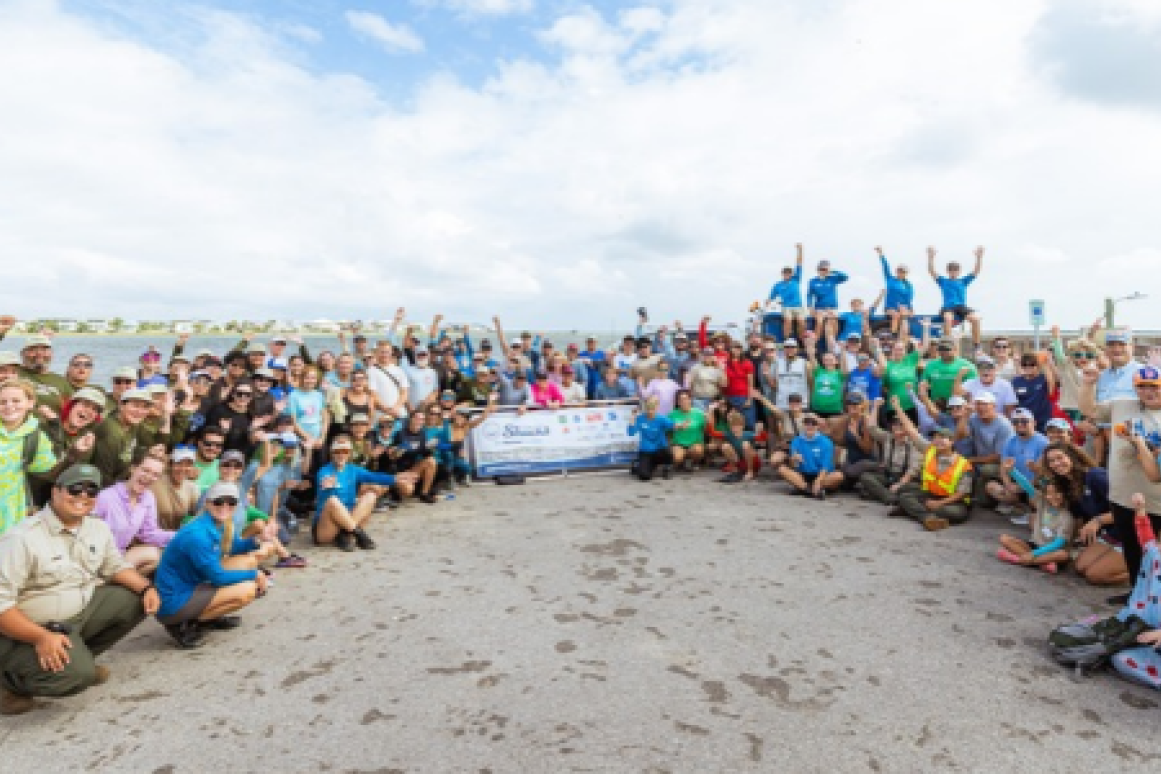
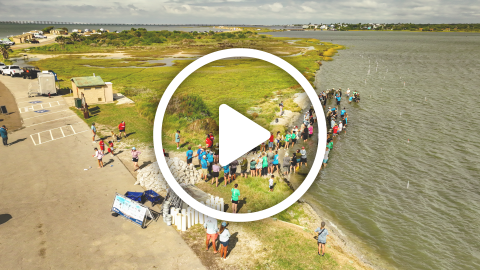
On October 3, 136 volunteers gathered at Goose Island State Park in Rockport for the first fall Community Oyster Reef Restoration Event hosted by the Sink Your Shucks™ Oyster Shell Recycling Program.
Working in assembly lines that stretched from the staging area to the water's edge, volunteers filled 1,140 biodegradable bags with reclaimed oyster shell, returning an estimated 15,000 pounds of shell to St. Charles Bay. Once back in the water, the shell will provide essential hard substrate where baby oysters, known as spat, can attach and grow, helping restore valuable oyster reef habitat.
The event also marked an important milestone for the program. Some of the shell used during the restoration effort had been collected through a new partnership with the South Texas Coastal Initiative, allowing oyster shell from inland communities to be returned to the coast rather than ending up in a landfill.
For participants, the restoration effort offered a chance to make a direct and lasting impact on Texas bays.
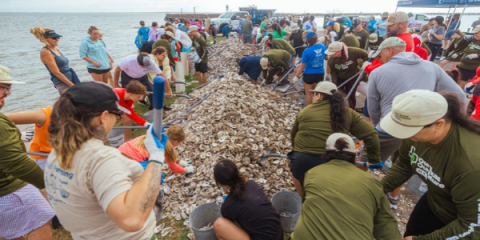
A lot of people don't know, but we've lost about 90% of oyster reefs across the globe, and that includes the Gulf.
Events like this allow us to make a positive change locally by putting shells back in the bay where young oysters can settle and create new reef habitat in areas where it has been lost. These efforts are important for our coastal ecosystems, our coastal communities, and our coastal economy.
Dr. Jennifer Pollack.
According to Dr. Pollack, oyster reef restoration is about much more than oysters alone. Healthy reefs support entire coastal ecosystems by providing habitat for fish, shrimp, and crabs, improving water quality through natural filtration, and helping protect shorelines from erosion.
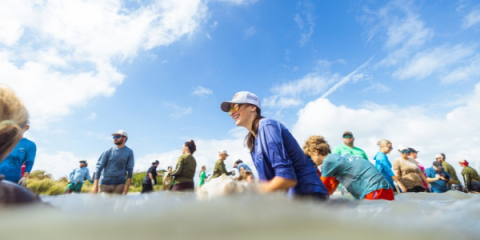
For the volunteers passing bags down the line that morning, conservation was more than a concept. Every bag represented a tangible contribution to the future of Texas bays and a reminder that restoring coastal habitat is something everyone can be part of.
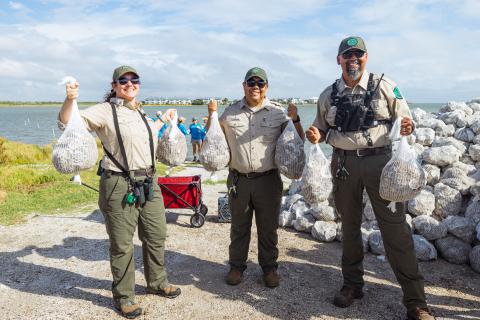
The oyster shell returned during the event may have traveled more than 100 miles to get there, but its journey ended exactly where it was needed most: back in the bay, helping build the next generation of Texas oyster reefs.